
 Maxine Annel
· Research
NeuroExo
A low-cost brain-computer interface for at-home stroke neurorehabilitation
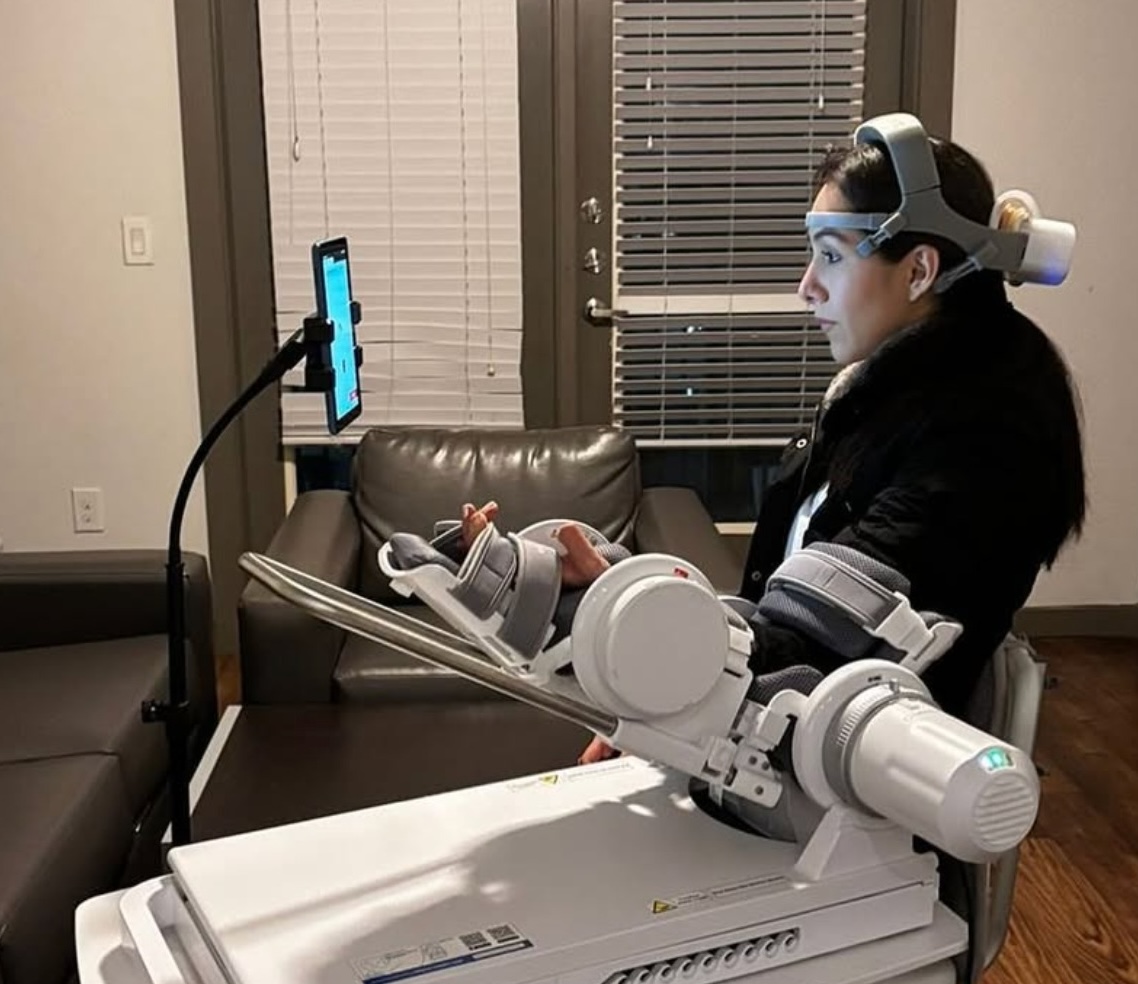
The NeuroExo project develops a low-cost, noninvasive brain-computer interface (BCI) system paired with an upper-limb robotic exoskeleton for at-home stroke neurorehabilitation. The goal is to democratize access to safe and effective robotic rehabilitation — not only in clinics, but in the comfort of patients’ homes.
The Challenge
Stroke survivors often lack access to consistent, long-term rehabilitation therapy. Traditional clinic-based approaches are costly and require physical therapists or technicians. NeuroExo addresses this by providing a portable, easy-to-use system that patients can operate independently at home.
How It Works
The NeuroExo system uses scalp EEG to decode movement intent from the brain and translates those signals into commands that guide a robotic exoskeleton to assist upper-limb movement. Key features include:
- No surgery required — fully noninvasive EEG-based BCI
- At-home use — designed for patients to operate without assistance
- Real-time feedback — visual GUI shows electrode signal quality and guides setup
- Low-cost design — built from commercial off-the-shelf components for accessibility
Early Feasibility Study
An early feasibility study consisted of a six-week protocol: an initial training and calibration phase at the clinic, followed by 60 sessions of neuromotor therapy at home. Participants achieved a compliance rate between 21% and 100% (average 69%), while maintaining adequate signal quality and positive perceived BCI performance.
Publication
González-España, J.J., Sánchez-Rodríguez, L., Pacheco-Ramírez, M.A., Feng, J., Nedley, K., Chang, S.-H., Francisco, G.E., & Contreras-Vidal, J.L. (2025). At-Home Stroke Neurorehabilitation: Early Findings with the NeuroExo BCI System. Sensors, 25(5), 1322.
Collaborators
- UH BRAIN Center — Dr. Jose L. Contreras-Vidal
- TIRR Memorial Hermann — Dr. Gerard E. Francisco, Dr. Shuo-Hsiu Chang
- UH College of Architecture and Design — Jeff Feng
Learn More
Visit the official project website: neuroexo.com