· Research
La Catrina Monarca
Fusion of cultural heritage, art, and neuroscience - EEG during dance inspired by monarch butterflies and Día de los Muertos

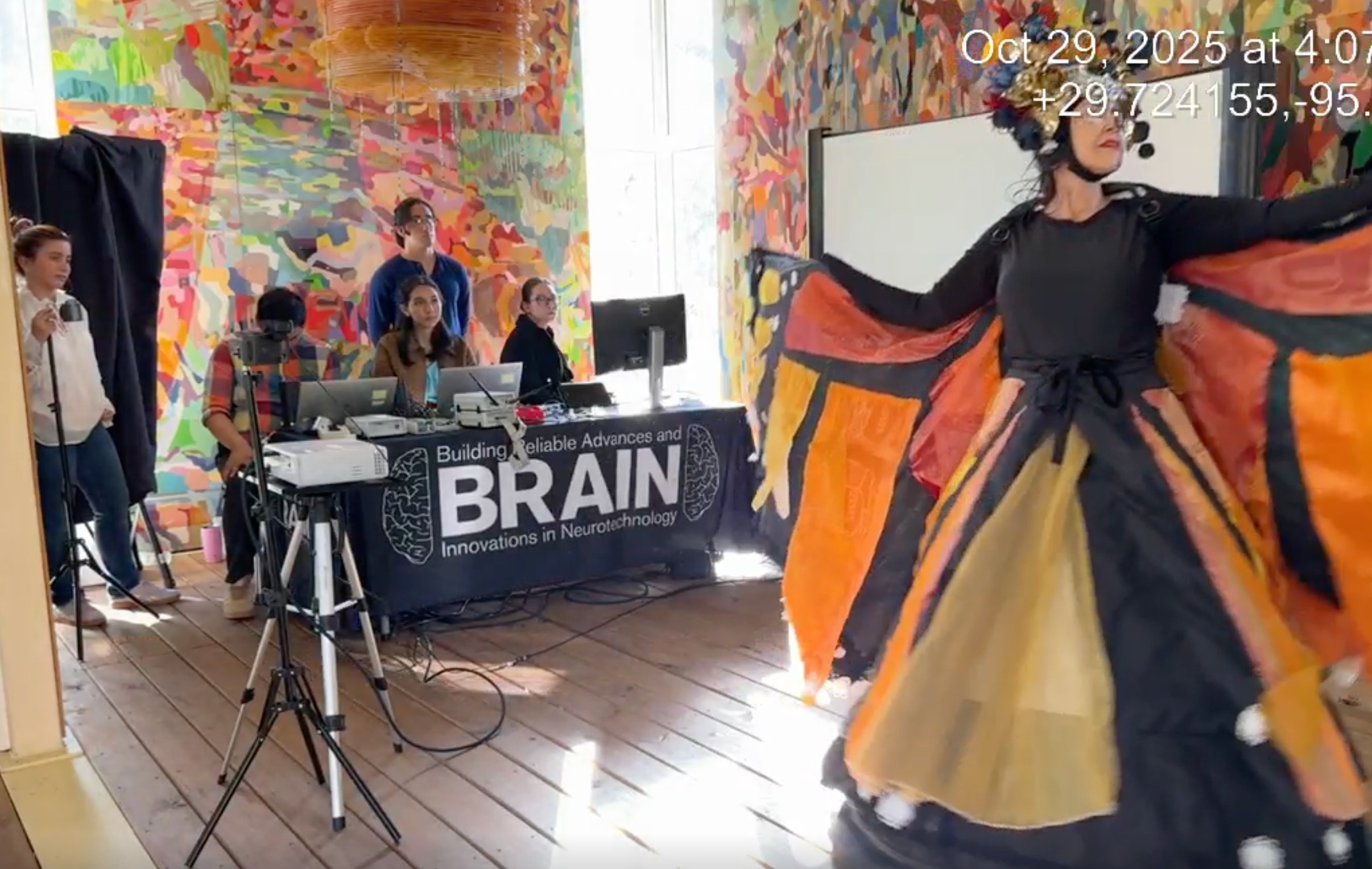
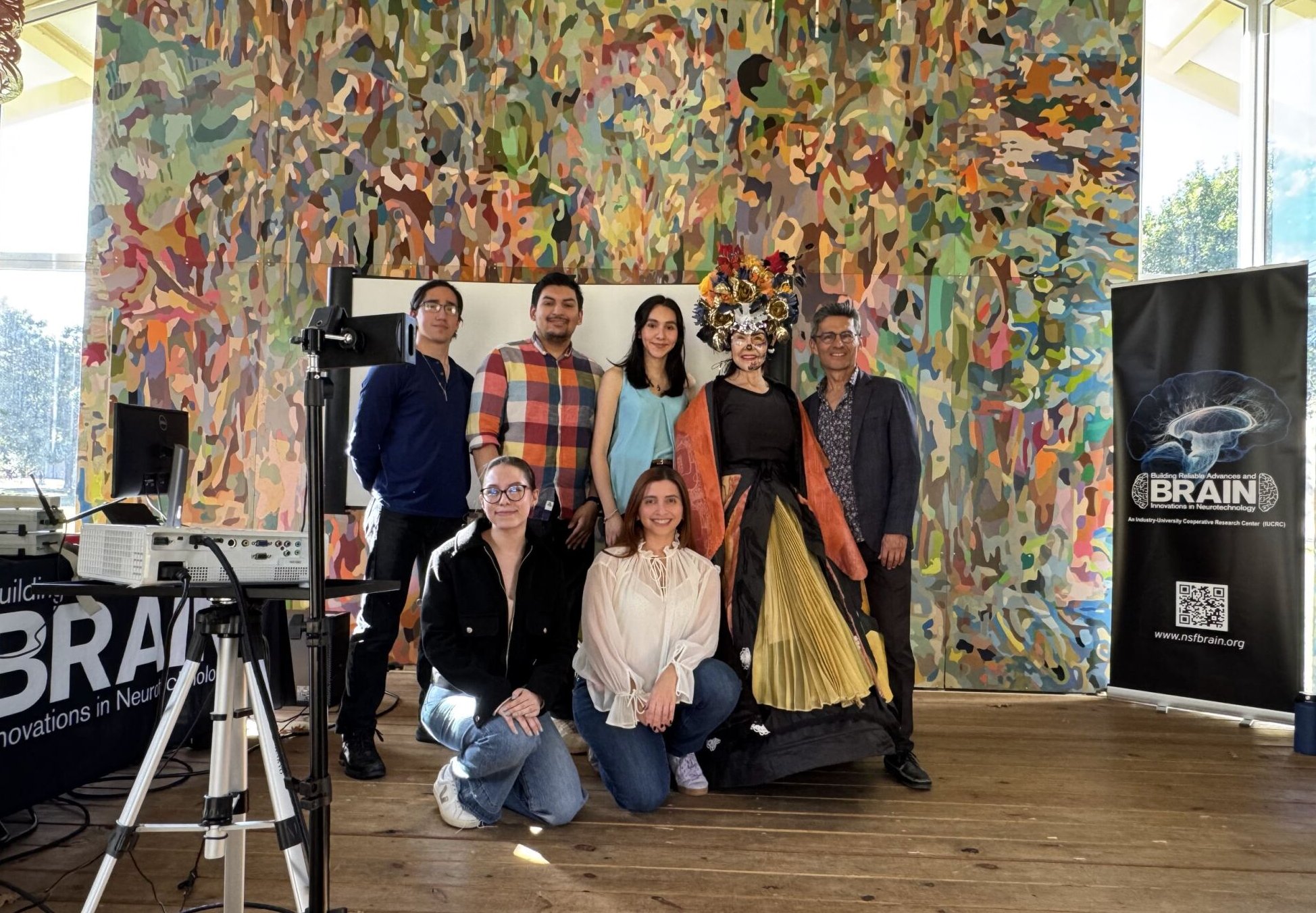
La Catrina Monarca is a multimodal art performance by environmental artist Geraldina Interiano Wise, in collaboration with Lizbeth Ortiz and a diverse Houston-based creative team. Combining contemporary choreography, wearable abstract sculpture, and original classical music (Las Campanas by composer Alex Moreno Gonzalez), the piece explores the final stage of metamorphosis and the subsequent dance of life and death encoded in the DNA of each Monarch butterfly.

The Concept
The performance draws inspiration from two powerful symbols of Mexican culture:
- La Catrina — The iconic skeletal figure representing Día de los Muertos
- The Monarch Butterfly — Symbol of transformation, migration, and the souls of ancestors returning
Performed while wearing MoBI (Mobile Brain/Body Imaging) technology and enhanced with AI-driven visualizations, the piece serves as a call to action for environmental sustainability and cultural reflection — highlighting the critical role of the Houston/Gulf Coast as a Monarch migration waystation.
Premiered at the Zoom Art Gala in Paris, this powerful performance blends science, ecology, cosmology, and ancestral heritage, representing resilience, democracy, and transformation.
Presentations
La Catrina Monarca was showcased at:
- Houston — October 29th, 2025, at the Jorge Pardo Foley, University of Houston
- AccelNet Conference at UCSF — November 10th, 2025, at the Sandler Auditorium, University of California San Francisco, as part of the Movement, Music and Brain Health AccelNet Implementation Phase 1 conference (Award #2412731, Award #2137255)
The AccelNet conference focused on growing convergent research to advance scientific understanding and applications of coupled brain activity, expressive movement, and music — building frameworks for brain, body, and music, and advancing data standards for dance, sound, and neurotechnology.

The Science
While performing, the dancer wore an EEG cap under her costume, capturing brain activity in real-time. This allowed researchers to study:
- Neural patterns during culturally meaningful creative expression
- Brain dynamics during embodied artistic performance
- The intersection of tradition, emotion, and neural activity
Team
Environmental Artist: Geraldina Interiano Wise
Dr. José L. Contreras-Vidal’s Neuroengineering Team (BRAIN + ACCELNET):
- Maxine Annel Pacheco-Ramírez
- Yoshua E. Lima-Carmona
- Aime J. Aguilar-Herrera
- Lianne Sánchez-Rodríguez
Multimedia Artist: Rodrigo Cid Velasco
Cultural Significance
This project demonstrates how neuroscience can honor and explore cultural traditions, showing that art and science can work together to preserve and understand our heritage while pushing the boundaries of what we know about the creative brain.