
 Maxine Annel
· Research
Emotional Flamenco
No More Carmens, multimodal recordings of a flamenco dancer, from rehearsals at the University of Houston to a live performance in Baltimore
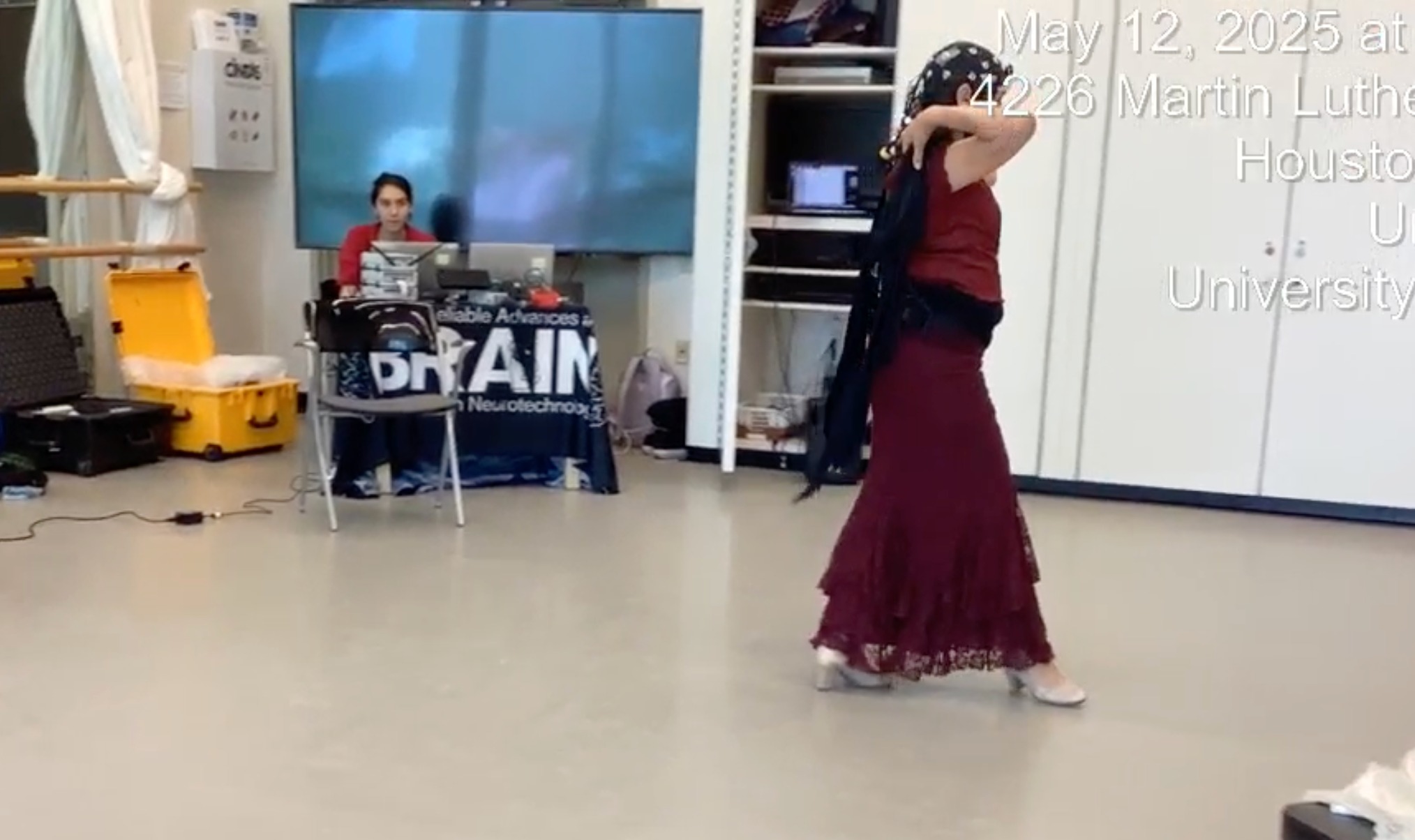
Flamenco is one of the most physically and emotionally intense dance forms in the world, built on percussive footwork, sharp turns, and full-body expression. That same intensity makes it a demanding setting for brain recording. No More Carmens followed a single flamenco artist, both choreographer and dancer of the piece, through a series of multimodal recordings that led to a final live performance.
From the Studio
The work began with rehearsals at the University of Houston School of Theatre & Dance. Across these sessions, the same dancer was equipped and recorded while developing and performing the choreography. The rehearsals were also where the recording setup was built and refined around the dancer: fitting the equipment to the choreography, testing it under real movement, and making sure the data would hold up once the piece moved to a live stage.
To the Stage
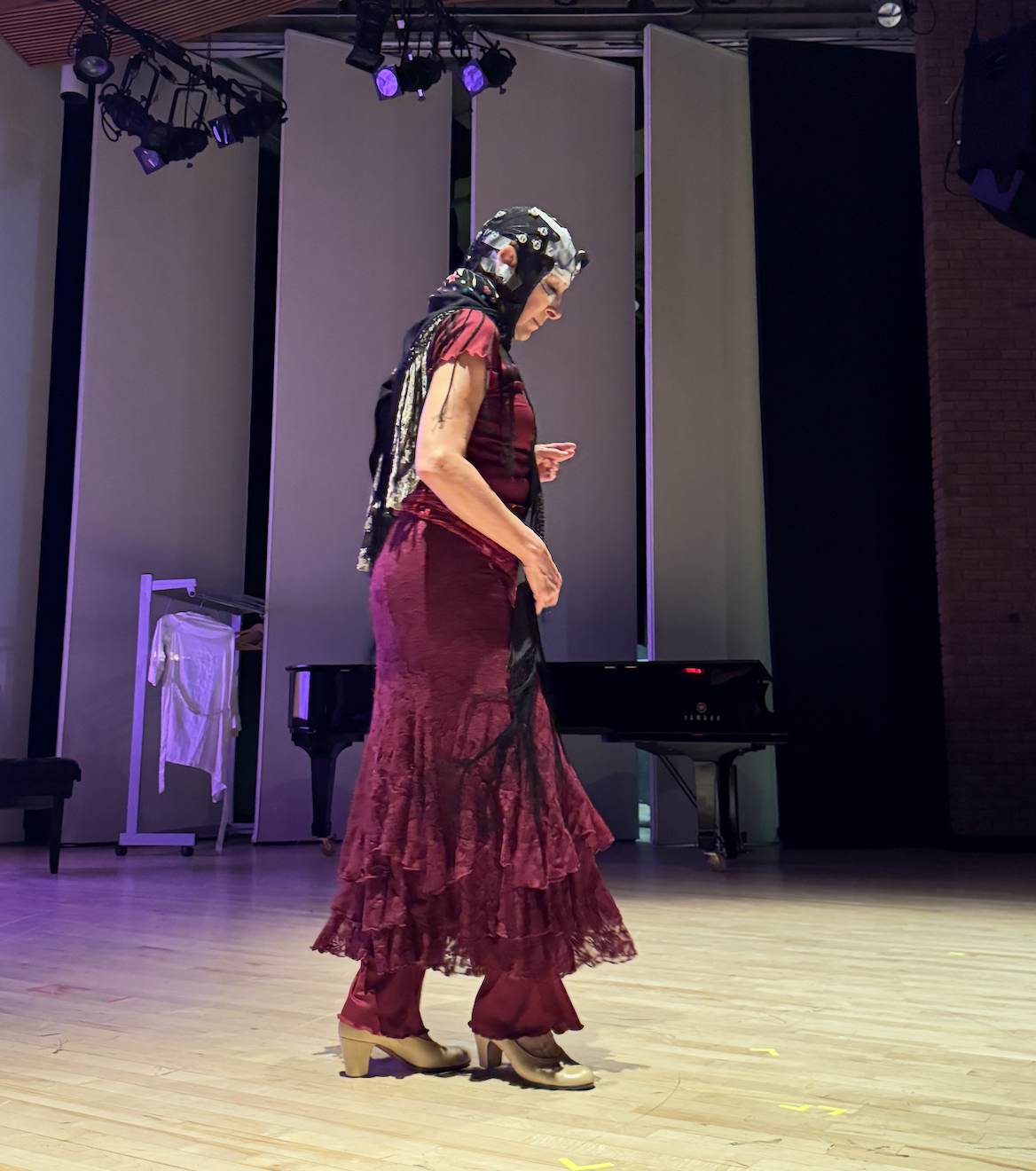
No More Carmens culminated in Baltimore, where the dancer presented the full piece as a live performance with visuals, in front of an audience.
Timeline
Data collection took place from May to June 2025. A data descriptor for this dataset is currently in progress.