· Research

Neural Aging & Dementia

Analyzing EEG signals from people with Alzheimer's and dementia for early detection
Analyzing EEG signals from people with Alzheimer's and dementia for early detection

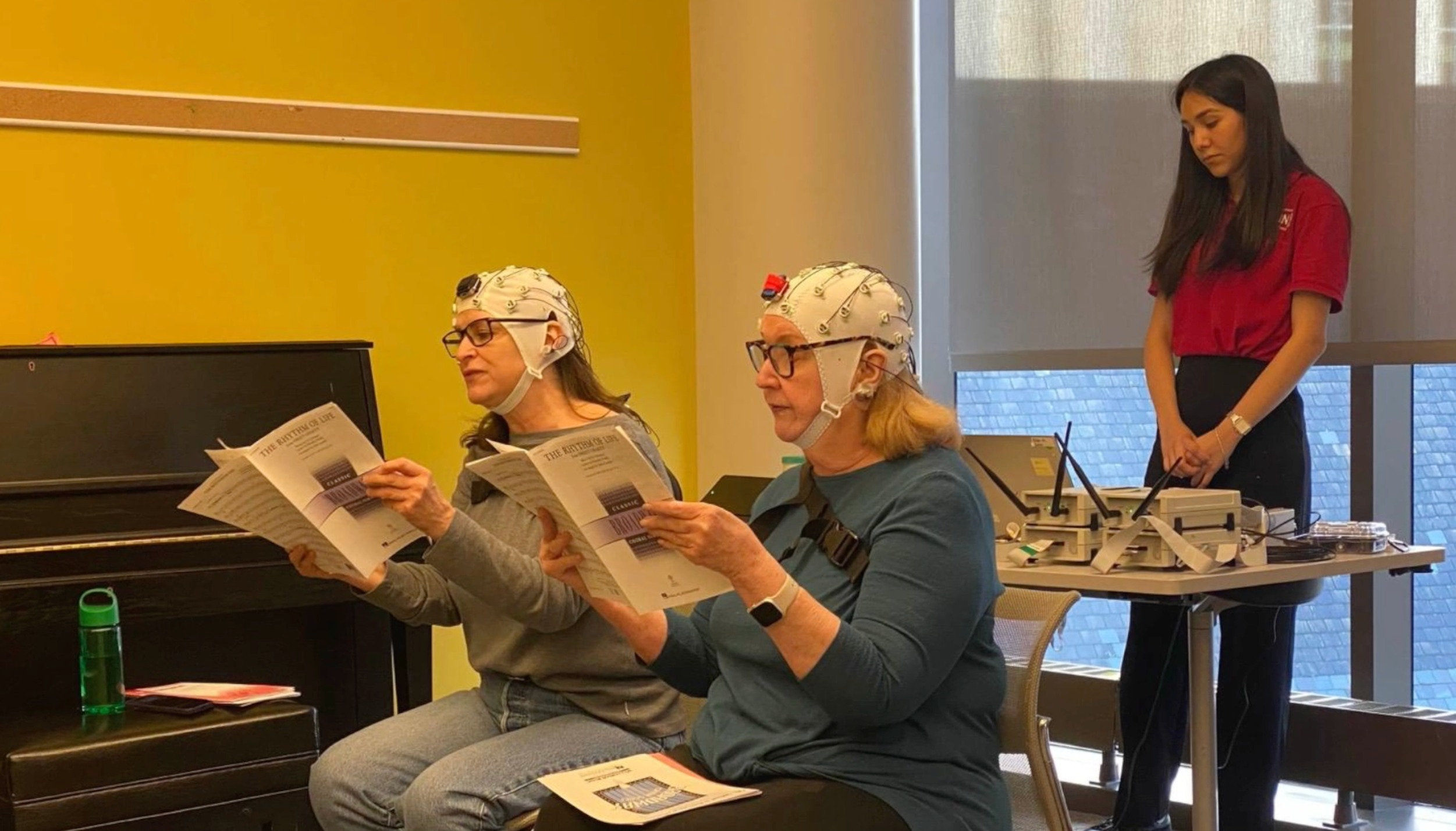
As the global population ages, Alzheimer’s disease and related dementias affect millions of families worldwide. This project analyzes EEG signals from people with cognitive decline to better understand the neural markers of these conditions and develop non-invasive detection methods.

Research Focus

We study brain activity patterns in:

  • Alzheimer’s Disease — Progressive memory loss and cognitive decline
  • Vascular Dementia — Cognitive impairment from reduced blood flow
  • Mild Cognitive Impairment (MCI) — Early stage that may progress to dementia
  • Healthy Aging — Control comparisons

Key Questions

  1. What EEG patterns distinguish normal aging from pathological decline?
  2. Can we detect Alzheimer’s earlier through neural markers?
  3. How do art and music interventions affect brain activity in dementia patients?
  4. What brain regions show the earliest changes?

Methodology

  • High-density EEG recordings during rest and cognitive tasks
  • Comparison of spectral power, connectivity, and network dynamics
  • Machine learning analysis for pattern detection
  • Longitudinal tracking of neural changes

Connection to Art Research

This work connects to our art-neuroscience research: if we understand how creative activities affect healthy brains, can we use art interventions to support brain health in aging populations?

Clinical Impact

Our goal is to contribute to:

  • Earlier diagnosis through accessible EEG screening
  • Personalized interventions based on individual neural profiles
  • Art-based therapies for cognitive maintenance
  • Affordable monitoring using portable EEG technology

Timeline

Data collection began in March 2025, and we continue to work with the collected data to identify neural markers and develop detection methods.

Back to Projects