 Maxine Annel
· Outreach
Children's Museum Brainiverse
An immersive neuroscience experience bringing EEG and brain science to children ages 6-12 at the Children's Museum Houston
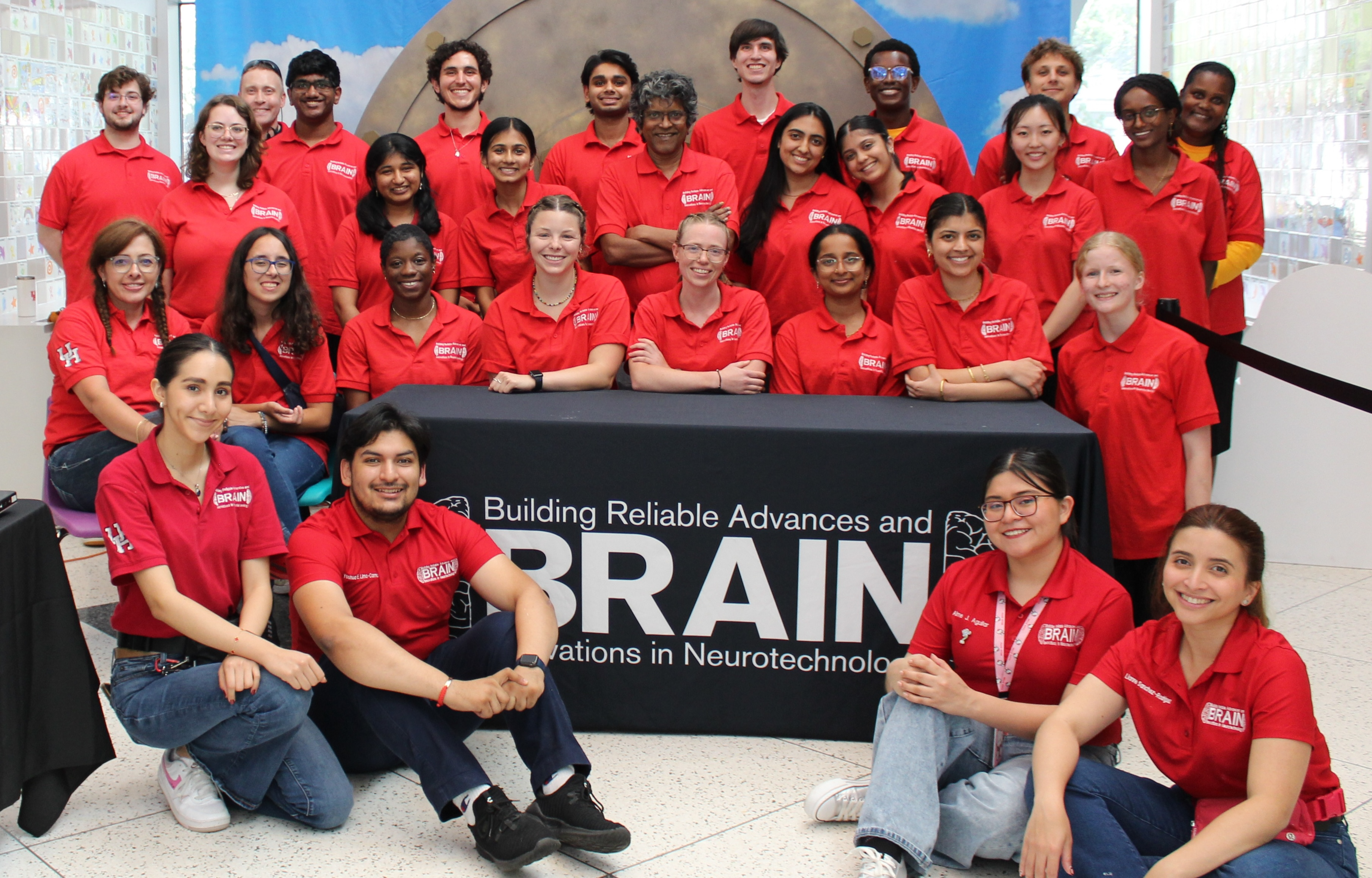
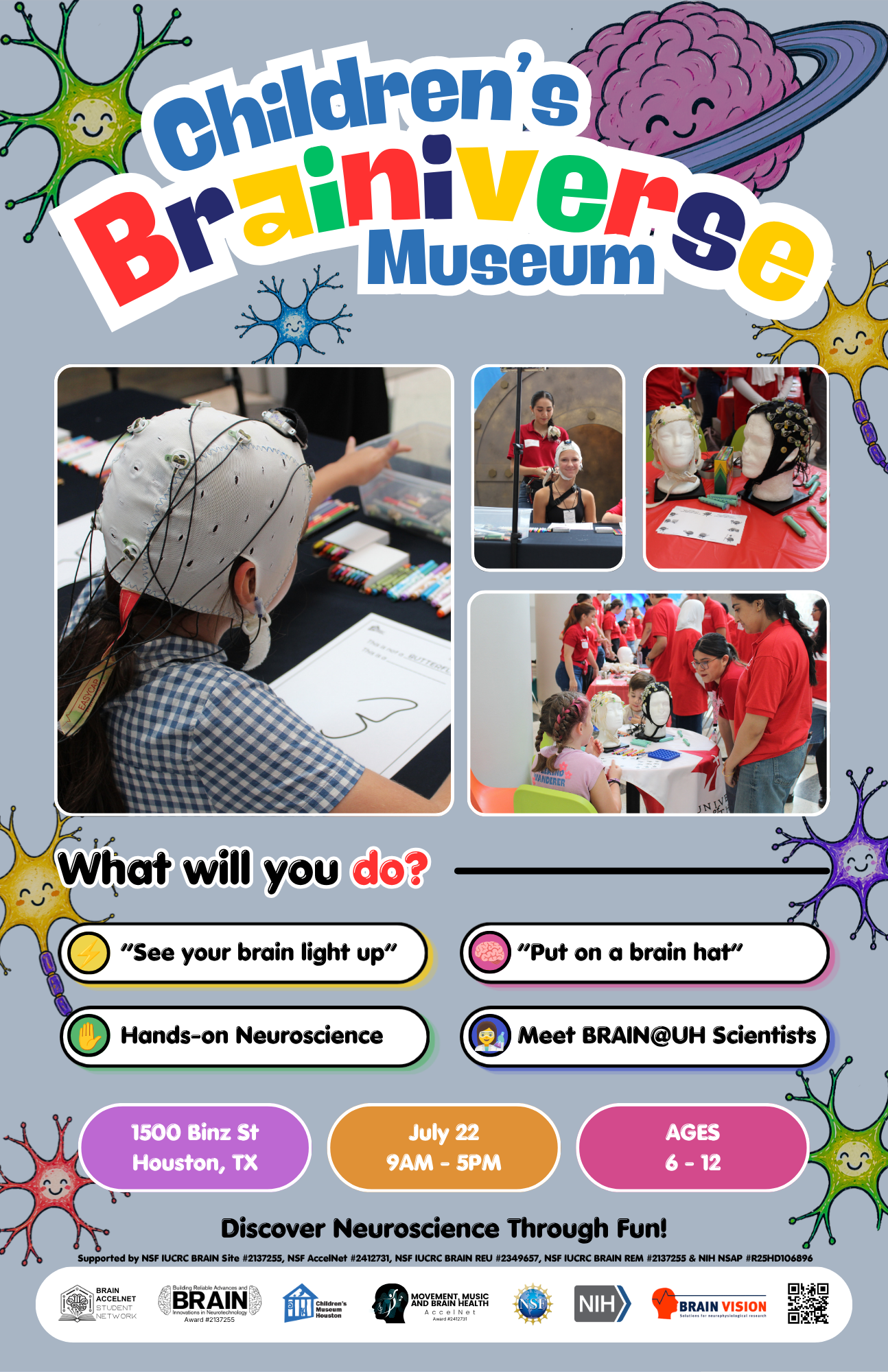
Children’s Museum Brainiverse is an immersive public outreach event co-organized by the IUCRC BRAIN Center at the University of Houston in collaboration with the Children’s Museum Houston. Taking place on July 22, 2026, 9 AM—5 PM at 1500 Binz St, Houston, TX, the event invites children ages 6—12 to explore neuroscience hands-on — putting on brain hats, watching their brain signals light up in real time, and meeting the scientists behind the research.
The Experience
Brainiverse transforms the Children’s Museum Houston into an interactive universe of the brain. Visitors move through stations designed to make neuroscience tangible, playful, and awe-inspiring:
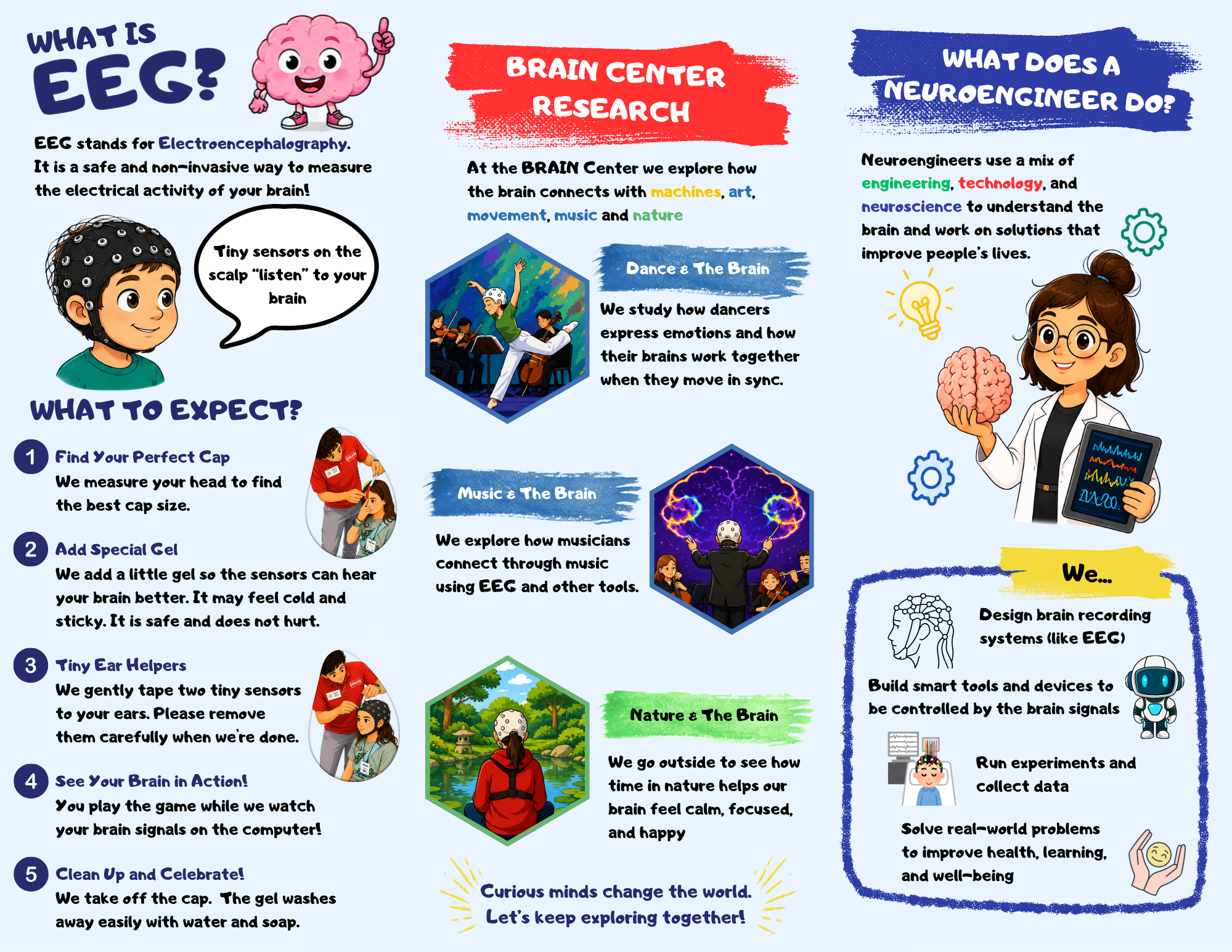
- “See your brain light up” — children wear EEG caps and watch their own brain activity visualized in real time on a screen, while they play a game
- “Put on a brain hat” — hands-on introduction to EEG sensors and what they measure
- Hands-on Neuroscience — interactive demos connecting brain signals to movement, music, and art
- Meet BRAIN@UH Scientists — researchers explain what neuroengineers do and why it matters
- Research Participation (IRB-approved) — families who wish to contribute to science can participate in a formal EEG recording session
The immersive visuals displayed throughout the event are grounded in real neuroscience, connecting artistic experience to scientific data in a way accessible to all ages.
About the Research
At the BRAIN Center, we study how the brain connects with machines, art, movement, music, and nature. Brainiverse brings that work out of the lab and into the community — giving children and families a direct encounter with the science of the mind.
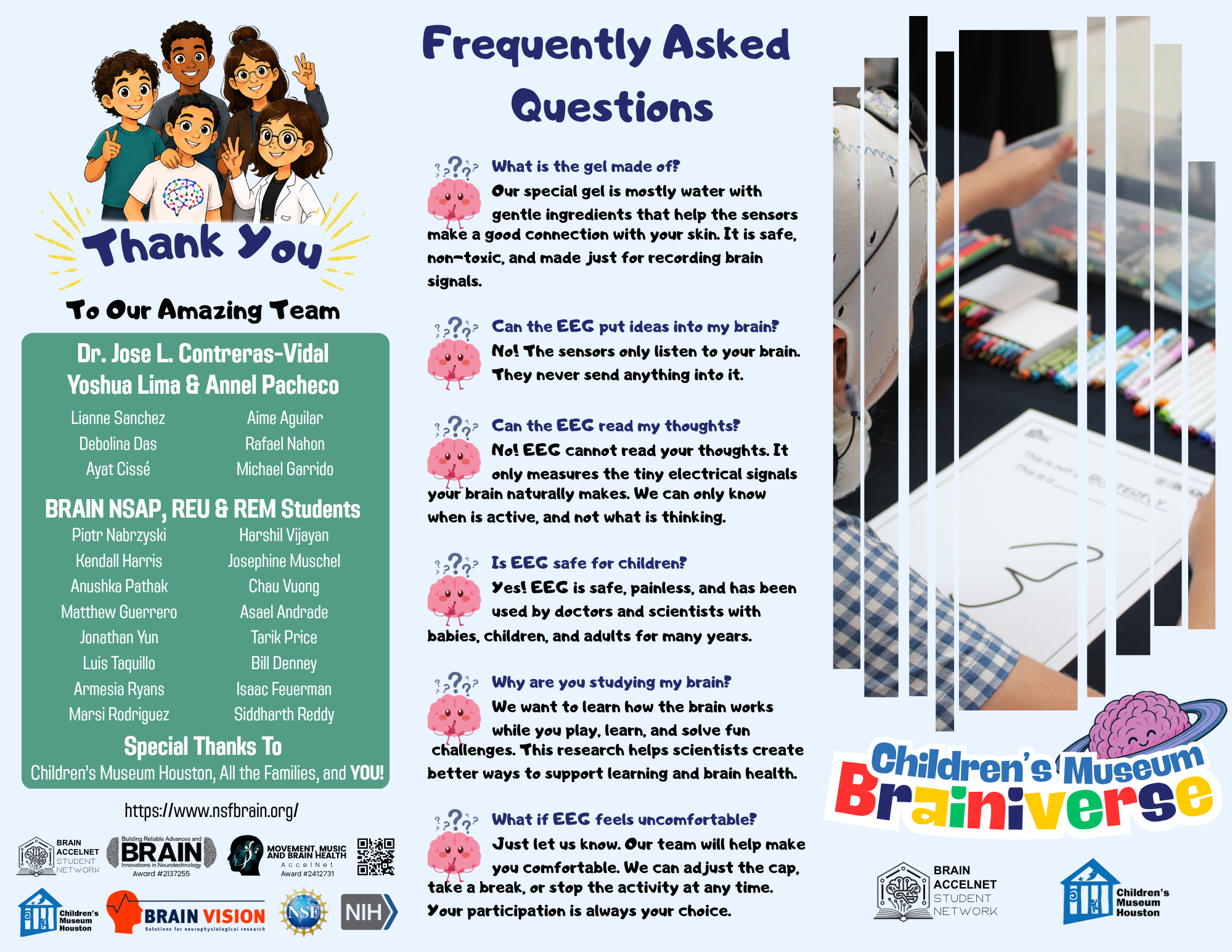
EEG (Electroencephalography) is a safe, painless, and non-invasive technology that measures the tiny electrical signals your brain naturally produces. It cannot read thoughts or send anything into the brain — it only listens.
Event Materials
What Comes Next
The data collected at Brainiverse will contribute to a publicly available data descriptor, sharing EEG and movement signals from real-world, naturalistic settings with the global research community. The first working meeting for the descriptor is scheduled for July 23, 2026 — the day after the event.
This dataset will advance open science in pediatric neuroscience and Mobile Brain/Body Imaging (MoBI), and represent a landmark contribution from a single-day community event to the international research landscape.
The Team
Principal Investigator:
- Dr. Jose L. Contreras-Vidal — Director, IUCRC BRAIN Center & NSF AccelNet, University of Houston
Event Co-Organizers:
- Yoshua E. Lima-Carmona — BRAIN-AccelNet Student Network (BASN) President; Lead Organizer
- Maxine Annel Pacheco-Ramírez — Movement, Music and Brain Health NSF AccelNet Coordinator, Award #2412731, Treasurer (BASN); Co-Organizer
BASN — Station Leaders/staff:
- Lianne Sanchez Rodriguez (Set-Up)
- Aime J. Aguilar Herrera (IRB)
- Rafael Nahon (IRB)
- Ayat Cisse (Clean Up)
- Debolina Das (Clean Up)
- Michael Garrido (Finance/Transportation)
- Maxine Annel Pacheco-Ramirez (Data Collection)
- Yoshua E. Lima-Carmona (Data Collection)
BRAIN NSAP, REU & REM Volunteers:
Piotr Nabrzyski, Harshil Vijayan, Kendall Harris, Josephine Muschel, Anushka Pathak, Chau Vuong, Matthew Guerrero, Asael Andrade, Jonathan Yun, Tarik Price, Luis Taquillo, Bill Denney, Armesia Ryans, Isaac Feuerman, Marsi Rodriguez, Siddharth Reddy
Special Thanks: Children’s Museum Houston, All the Families, and YOU!
Partners & Funding
This event is made possible through the support of:
- Children’s Museum Houston
- Brain Vision — equipment and support
- NSF IUCRC BRAIN Center — Award #2137255
- NSF AccelNet: Movement, Music and Brain Health — Award #2412731
- NSF IUCRC BRAIN REU — Award #2349657
- NSF IUCRC BRAIN REM — Award #2137255
- NIH NSAP — Award #R25HD106896
- BRAIN-AccelNet Student Network (BASN)